Styling Guide
The Art of Layering Necklaces
April 8, 2026
Stacking necklaces is one of the fastest ways to elevate a simple top or dress—but without a few rules, chains twist, pendants fight for attention, and your look can read as cluttered instead of couture. The goal is a graduated silhouette: each piece has room to shine while supporting the next.
“Spacing is the secret. When lengths breathe, the stack looks expensive—even if every piece is everyday gold.”
Start with a length map
Before you mix metals or charms, plan your drop. A common four-layer formula is choker (14–16 in), princess (18 in), matinee (20–24 in), and a longer pendant (26–32 in). The idea is a two-inch (or more) gap between each resting point on your chest. That gap is what keeps chains from tangling when you move and what lets a statement pendant sit in open space.
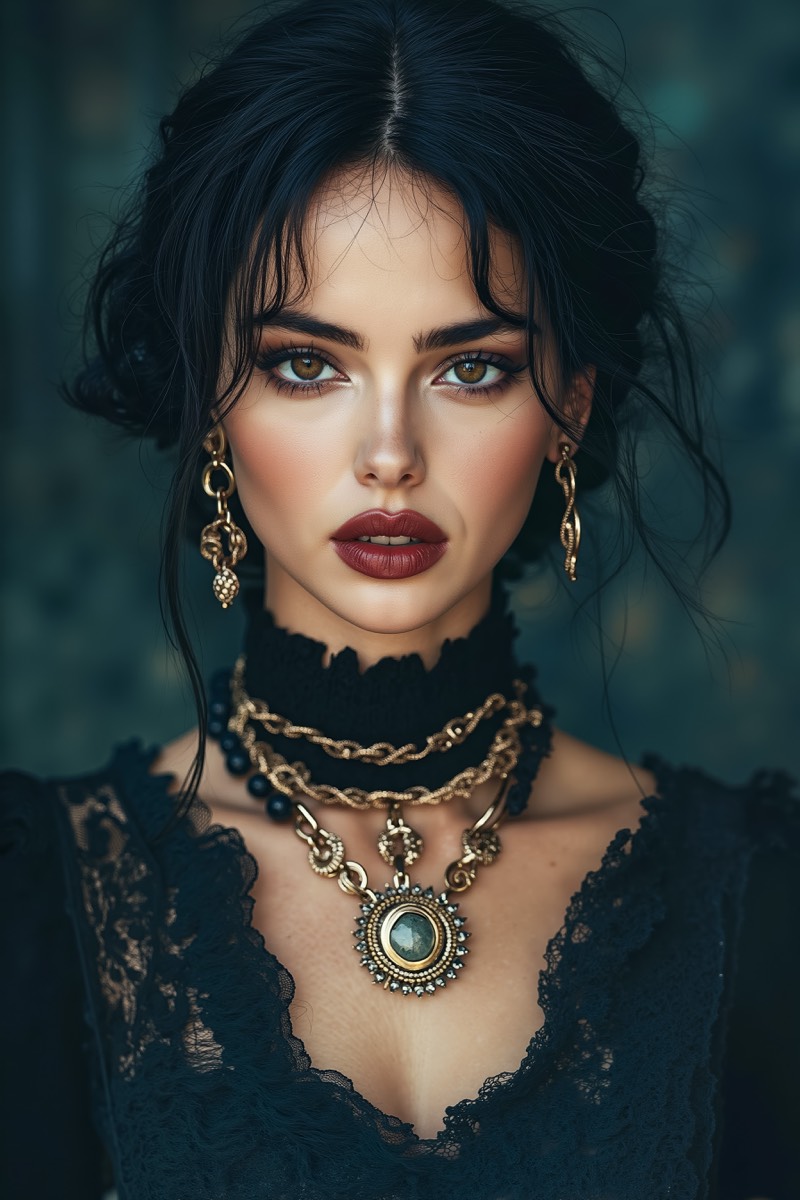
If you only own two or three pieces, you can still fake depth. Use a short collar with a long lariat, or add a thin extender to one chain to stagger them without buying an entirely new wardrobe of lengths.
Mixing chain types (without chaos)
Texture is what makes a stack look editorial. Try pairing a flat herringbone or paperclip chain (clean lines) with a rope or cable (structure) and one very fine chain (whisper). Avoid stacking multiple chunky, identical links at the same height—that is where tangles and “metal soup” start.
- ▸ One hero: let a single coin, bar, or drop anchor the look; keep other pendants smaller or open.
- ▸ One whisper: a barely-there chain near the base of the neck adds light without extra noise.
- ▸ Weight watch: if every piece is heavy, the stack will pull forward—balance with one airy layer.

Pendant pairing that works
As a simple rule, stagger shapes: round with linear, or organic with minimal. If you love a bold medallion, place it on the longest chain so it can sit lower and clear of shorter pendants. When two charms sit at similar heights, they will visually compete. For everyday wear, two focal points max (for example, a zodiac on the mid chain and a bar on the bottom) is usually enough. Save three-plus focal charms for very open necklines and occasion dressing.
Collar shape matters, too. A deep V or scoop gives you vertical space to play; a high crew works best with a choker and one longer piece only. Button-down? Leave one or two top buttons open and treat that negative space as your canvas. At CREZOOM we design layers that share a finish family so you can build sets over time, mixing without mismatch.
Color temperature and care
Warmer gold reads softer against skin; cooler gold pops next to white linen. If you mix a rose-gold choker with yellow-gold pendants, keep the rest of your look quiet so the finish story can register. Revisit how you store each chain—hanging, flat in a roll, or in soft pouches—so links stay kink-free and your next stack comes together in minutes, not a detangling session.
Layering is less about piling on everything you own and more about choosing four intentional inches of vertical line. Get that right, and a simple tee feels like a full look. Photograph your favorite stacks so you can repeat them on busy mornings without second-guessing lengths.
Shop the look
Pieces that layer beautifully on their own—or together.