Styling Guide
Ring Stacking: A Visual Guide
April 10, 2026
A well-built stack reads personal but polished: metal choices feel intentional, stone sizes vary so nothing buzzes, and the negative space on your hand does as much work as the rings themselves. You do not need a full finger of jewelry to participate—one statement plus two whisper-thin bands can be enough. This guide is about making those choices on purpose, especially when you are curious about mixed metals and everyday comfort.
“One bold ring wants quiet neighbors. Give it space—or move it to a finger that can handle the story.”
Metals: warm, cool, and the mix in between
Yellow gold carries warmth; white metals read crisper. Rose gold bridges skin tone and can soften a yellow-centric stack. If you are new to mixed metals, pick a dominant finish (roughly 60% of the visual weight) and add one or two accent pieces in a second metal. A simple recipe: two yellow bands, one white band, one signet with a neutral face that ties the palette together. Avoid the rainbow effect of five finishes at once—unless that is the point of your look.

Patina and finish matter, too. High-polish rings reflect light; brushed or hammered bands diffuse it. A stack of all mirror-bright can feel competitive; mix one soft texture in and the hand relaxes. If you are shopping online, zoom on edge thickness—chunky shanks and delicate bands sitting at the same knuckle can catch on each other, which is a practical reason to adjust placement before aesthetics.
Balancing bold and delicate
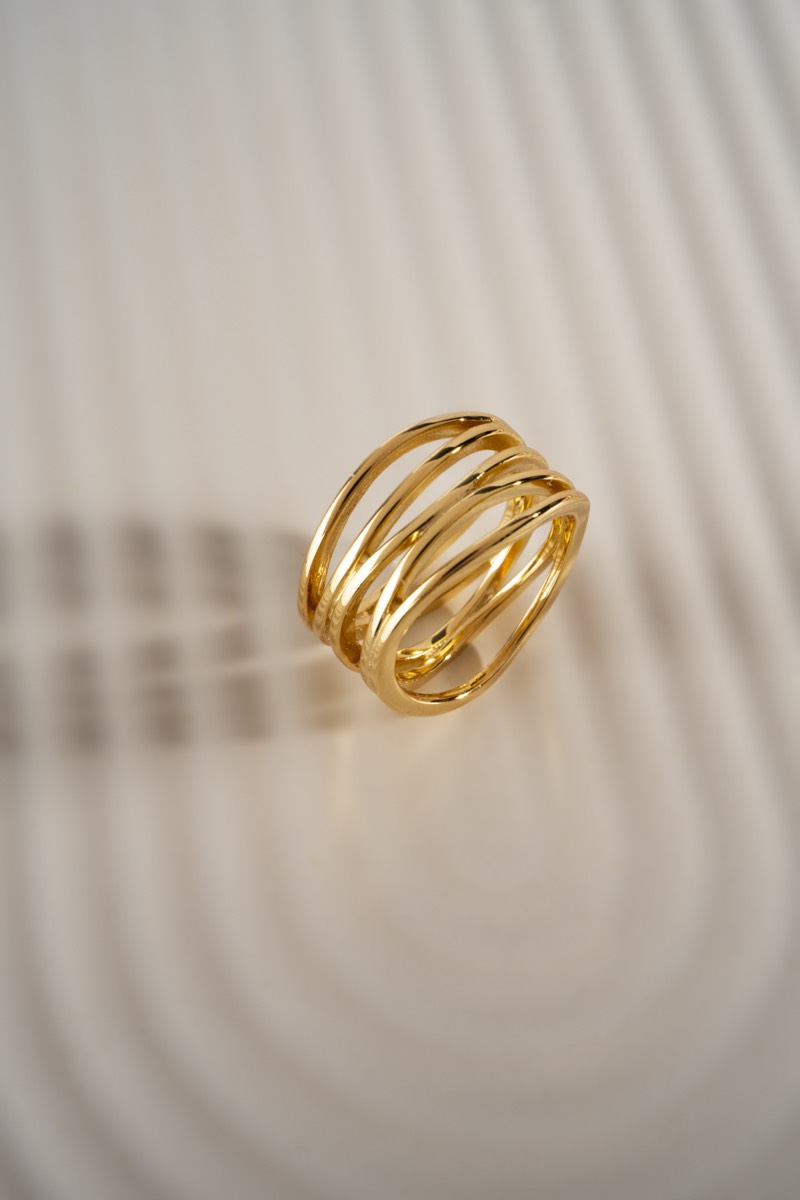
Stacking is composition. A wide cigar band, an engraved signet, or a cluster stone wants breathing room. Pair that piece with ultra-slim bands (1.5–2.5 mm) on neighboring fingers, or on the same finger with a sliver of skin showing if your sizing allows. If two bold rings sit side by side, the eye does not know where to land, and the hand can look shorter.
- ▸ Height: keep tall settings away from the inside of the palm if you type all day; lower bezels and smooth cabochons are kinder to keyboards.
- ▸ Silhouette: alternate straight edges with crescent or notched stackers to seat rings flush where you want a tight stack.
- ▸ Symmetry optional: one statement on the right hand, minimal stack on the left can feel more modern than both hands “full.”

Which fingers read best (and why)
The ring finger and middle finger are the most forgiving for stacks; they are central, naturally balanced, and do not get in the way of a firm grip the way a pinky stack can (though a slim pinky band is iconic). The index is ideal for a single signet or a slim duo—add too much and you will feel the bulk when you pick things up. The thumb carries weight beautifully for one wide or sculptural piece; it is a power spot, not a place for four thin bands. Balance across both hands: if the right index is doing the talking, let the left hand recede, or echo with one slim band in the same metal.
Over time, your stack will grow with milestones—travel finds, gifts, a band that was “almost right” but the color was perfect. Curate: retire rings that spin constantly or pinch, and keep a small dish by your sink for the pieces you do not want to take into the garden or the gym. The best collections are worn, not stored.
For CREZOOM pieces, start with a finish family you can echo across the shop; build slowly, and let the stack tell a story you will still like when the light changes from morning coffee to late dinner. Keep a small ring dish at your office and another by your nightstand so “I should take this off” never becomes a lost piece.
When you are ready to expand the stack, photograph your current set from above and from the side—those angles reveal gaps where a new texture would click without crowding. Small rituals like that keep the story coherent as your taste evolves.
Shop the look
Bands and signets that play well with others.